Arts symbolize the ideals of the society at a certain time in history. Although, it is only architecture that truly bridges the gap between formal representation of ideas and reality of life as a beautiful scene. Architecture, since its early beginnings, has depended upon two major factors: the people’s mentality and the development of building techniques. Both science and art, the aim of architecture is to achieve a perfect match of esthetic and technological standards.
The history has seen various innovations that changed the aspect of the living space, but no other period has brought about more changes in architecture than the last century. Reconciling the principles underlying architectural design with rapid technological advancement and modernization of society, modern architecture represents a revolution in the esthetic values, showing up a vivid expression of the modern lifestyle.
Modernism in architecture came as a result of social and political revolutions and was driven by technological and engineering developments. The Industrial Revolution resulted in the invention of new building techniques, using newly-available materials such as iron, steel and glass. The structure and the materials (reinforced concrete, structural steel) are visually expressed in the design of the modern buildings.
The motto of the movement, as expressed by Louis Sullivan, is ‘form follows function’. Unlike the previous styles, in modernism the accent was no longer put on the ornaments of the facades, but on the way in which the functions of the building reflected in the exterior. The attempt of expressing pure forms resulted in the elimination of the ‘unnecessary details’ that characterized the eclectic and Victorian styles, promoting instead simplicity and clarity.
There have been several approaches to modernism, some of which are still manifested today:
– The Art Nouveau movement, represented by Victor Horta, Hector Guimard and Antoni Gaudi, used modern materials such as wrought iron to create exquisite ornaments.
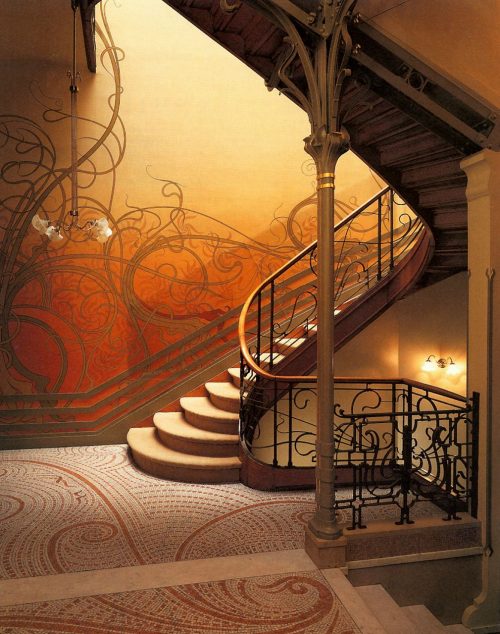
Stairway, Tassel House, Brussels, 1894 – designed by Victor Horta
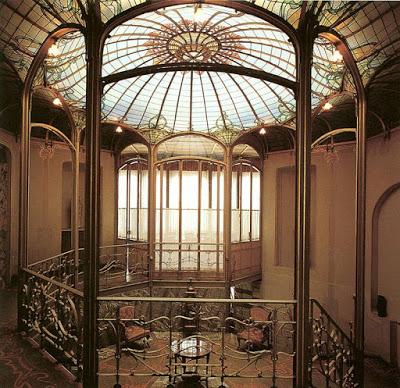
Hotel van Eetvelde, Brussels, 1895-1898 – Victor Horta
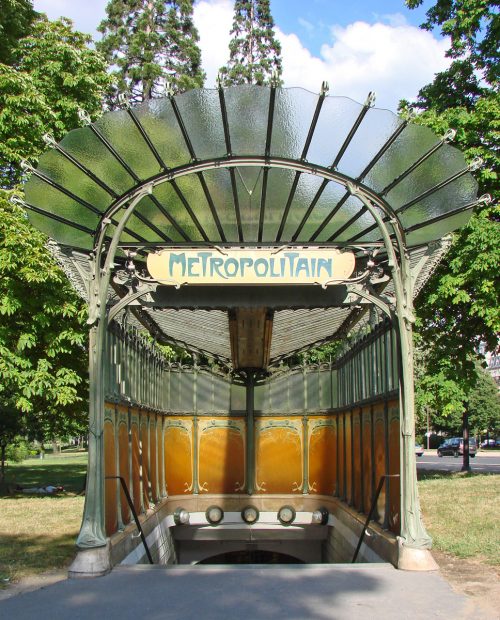
Entrance to the Porte Dauphine metro station, Paris,1899 – designed by Hector Guimard
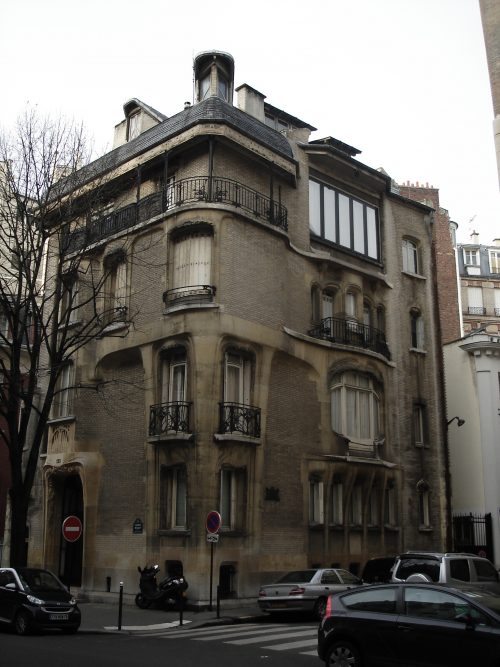 Hotel Guimard, Paris, 1912 – Hector Guimard
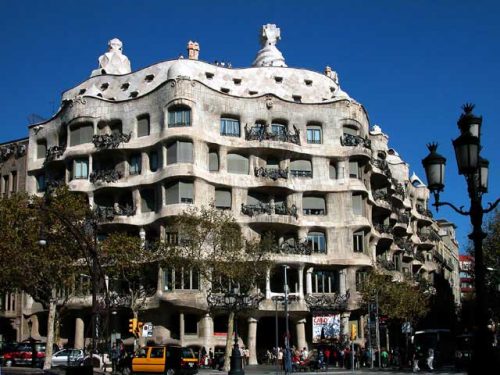
Casa Mila, Barcelona, 1906-1910 – Antoni Gaudi
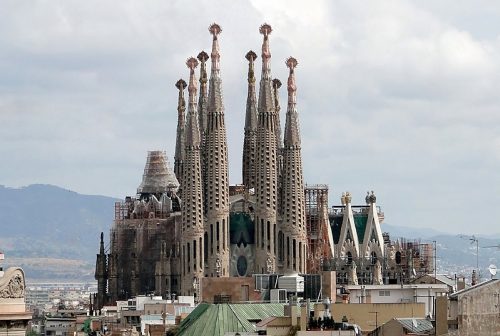
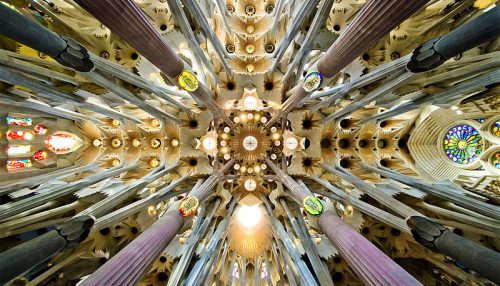
Sagrada Familia, Barcelona, 1883-present – Antoni Gaudi
– The United States, Frank Lloyd Wright’s prairie houses and organic style were a major influence on European architecture.
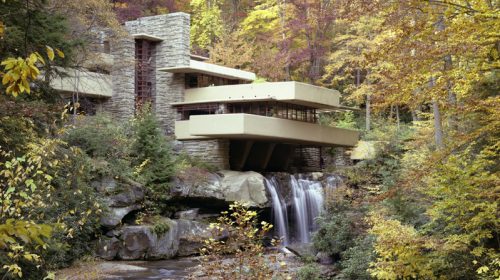
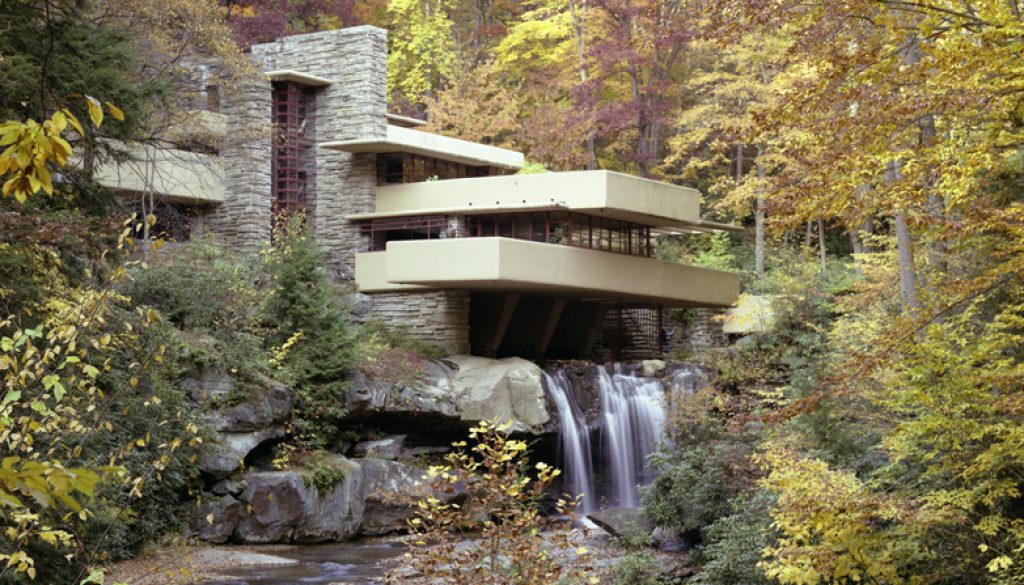
Fallingwater House, Pennsylvania, 1935 – Frank Lloyd Wright
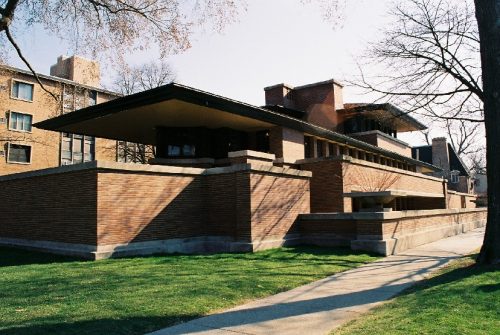
Robie House, Chicago, 1908-1910 – Frank Lloyd Wright
– In Germany, Walter Gropius founded the Bauhaus School in Weimar in 1919, which had a endometru contribution to the International style in architecture.
– After World War I, an art and design movement developed unique to the Netherlands. Founded by Gerrit Rietveld and known as De stijl, it was characterised by the use of primary colours and straight lines. Among the best known De Stijl creations, there are the
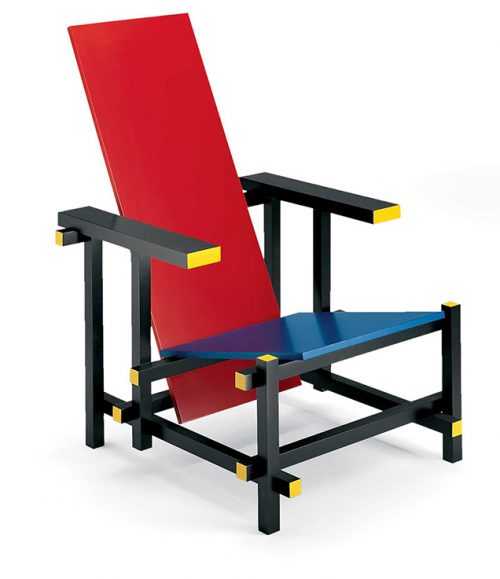 Red/blue armchair (1918) designed by Gerrit Rietveld
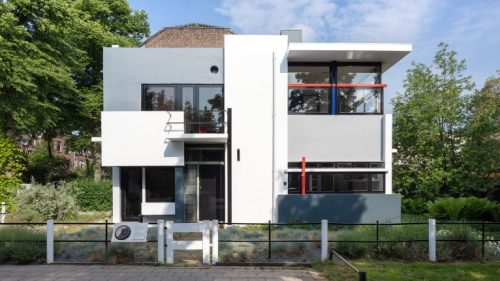 Schroder House (Utrecht, 1924) designed by Gerrit Rietveld
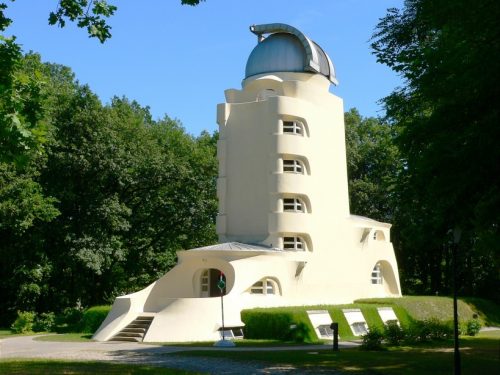
– Erich Mendelsohn designed in the expressionist style. His most remarkable project was The Einstein Tower(1919-1924):
– The postmodernist style, founded by Robert Venturi, is a reinterpretation of clasicism.
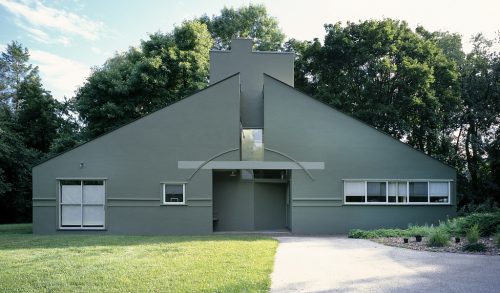 Vanna Venturi House,Pennsylvania, 1961-1964 – Robert Venturi
The most important styles in contemporary architecture are:
– The high-tech architecture, represented by Renzo Piano and Richard Rogers, affirms its technological esthetics by exposing the structural systems. The George Pompidou Centre in Paris and the Lloyds Building in London are the most representative constructions for this style.
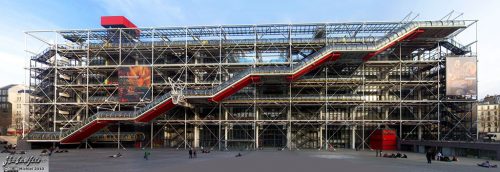
Georges Pompidou Centre, Paris, 1971-1977 – Renzo Piano and Richard Rogers
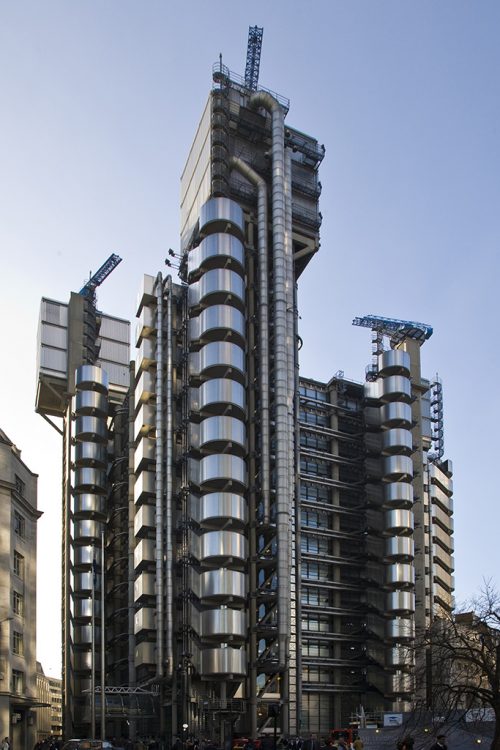
Lloyds Building, London, 1978-1986 – Richard Rogers
– Deconstructivism, represented by Frank Gehry, Daniel Liebskind and Zaha Hadid
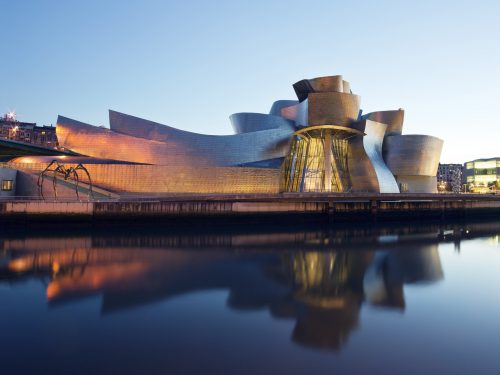
Guggenheim Museum, Bilbao, 1991-1997 – Frank Gehry
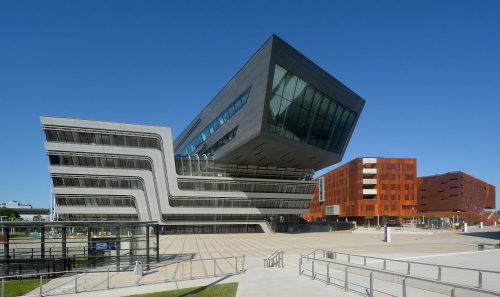
Library and Learning Centre of the Vienna University of Economics and Business Campus –
Zaha Hadid
– Neofuturism – represented by the Spanish architect Santiago Calatrava
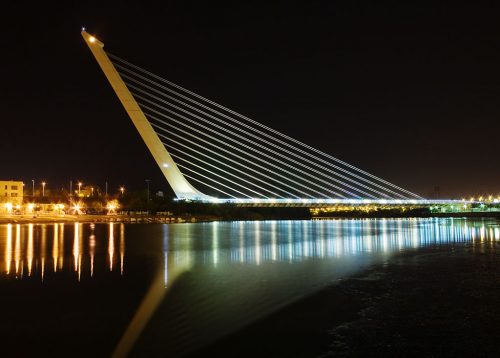
The Alamillo Bridge, Seville, 1989-1992 – Santiago Calatrava
Being a synthesis of the major changes that took place in the last century, the modern style in architecture mirrors the ideals of the contemporary society and promotes new esthetic principles. Based on technological development, architecture nowadays has reached countless possibilities. Still, one question remains: are those modern constructions a genuine achievement or merely a passing fad that will not be able to stand the test of time? Only time will reveal the answer…